
IFC
Model and data exchange
Industry Foundation Classes
Exchange structured geometry, assets, spaces, systems, relationships and properties independently of authoring software.
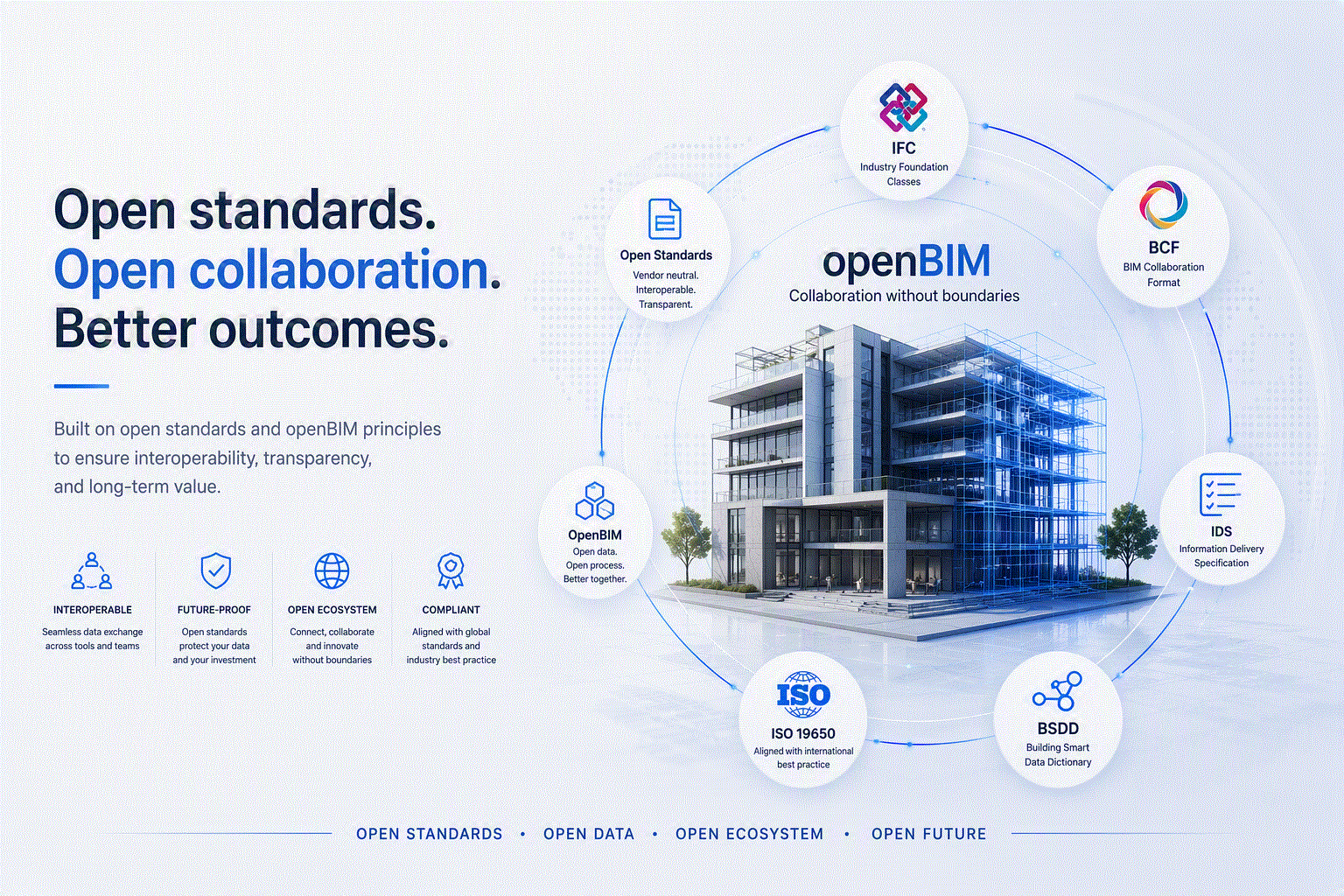
Oporo uses open industry standards to connect requirements, models, issues and handover data across disciplines, software platforms and the building lifecycle.
Connected formats
Each standard handles a different part of information delivery. Together, they create a practical route from requirements to operations.
Exchange structured geometry, assets, spaces, systems, relationships and properties independently of authoring software.
Share issues, viewpoints, comments, responsibilities and status without passing complete model files between teams.
Define which objects, classifications, properties and values an IFC delivery must contain, then validate them consistently.
Export structured project data for exchange with downstream delivery, reporting and operational workflows.
Apply ISO 19650-style naming, revision, suitability and review conventions to project documents.
Open workflow
Open exchange lets each participant use appropriate tools while maintaining a connected, verifiable information record.
Why open matters
Open standards support reliable collaboration today and keep building information accessible tomorrow.
Keep project information usable beyond a single vendor, licence or authoring environment.
Move data with its relationships and meaning intact, rather than relying on disconnected documents.
Turn written requirements into checks that can be repeated across submissions and revisions.
Connect issues and decisions to model objects without duplicating the entire model.
Use shared classifications and definitions to reduce ambiguity between disciplines and systems.
Create information records that remain practical throughout handover and building operation.
Open by design